Since the group formed in 1987, Arrested Development has brought their own flavor of music to the hip hop scene.
Started by Todd “Speech” Thomas in Atlanta, the group was on the forefront of the music scene in their early days, winning best new artist and best rap performance by a duo or group at the Grammys in 1993, to MTV Music Awards for their songs Tennessee in 1992 and the song People Everyday in 1993, along with a Soul Train Music Award for their album 3 Years, 5 Months and 2 Days in the Life Of… along with 17 other nominations throughout the groups existence.
The band has a long history of making music not just for fans of hip hop itself, but for the masses of people who dare to stand up for social issues.
“For me, music is therapeutic, it is a unifier,” Speech said during an interview. “It is a mood changer; music is just absolutely a positive force on this planet.”
Digging deeper into this topic, Speech said social justice/human rights and protest are still some of the most important things in his song writing. “It is the most important pillar in what we do. I would say that we have a few pillars, and activism is one of the most important, and the reason why is because it’s what we made the group for.
“So before Arrested Development was Arrested Development, we were doing just party music, and it didn’t fit my personality in particular. We decided, especially me as the lyricist, that we wanted to write songs about solutions. I also grew up in a very extreme time. I grew up Milwaukee, Wisconsin, and in Milwaukee; the statistic showed it was the worst place to grow up as a Black person. So, because of that, it helped me see a real contrast between what was fair and what was not fair, and what is going on in our country. It also made me want to write music that offered a different viewpoint and maybe some solutions if I could do that.”
To be able to do this, and reach a broader audience, Speech has included influences and samples from different genres of music starting with their first album, when they included jazz and blues, including sampling artists such as Buddy Guy, and soul music from James Brown and Sly and the Family Stone.
“It’s a really funny inspiration for (Sly and the Family Stone), because I didn’t know about him until (Arrested Development) had already started. So it wasn’t one of my inspirations initially, and then once I did learn about him, and started digging into their music, it totally like inspired what we would do from there on.”
He added that he found Sly’s music from a Snoop Dogg and Dr. Dre song One Eight Seven (released in 2006) where he fell in love with the drums on the track and later found the source of the sample in Sly’s work. “It was a huge discovery for me. I was like, ‘Ah, that is where they got these drums from!’ and I said I will listen to all of this group’s music and that is what I did. I just fell in love with it.”
Speech also described the group as one big family, which includes both men and women, from all ages, who have participated in the group from the start. He described that after the band’s hiatus in 1995, he went on a solo career, releasing a few albums in Japan that were a hit. Then, being encouraged by a former member of the group, Speech reassembled Arrested Development with four of the original members (including himself) and started putting music back out as the group.
Further evolution into the group as a family occurred when members of the group wanted to leave and try their hands at solo careers, and Speech would find replacements for the departing members, but allowing those members to come back at any time.
“Once you’re a member of the group, you’re always a member of the group.” He added that for the group’s performance at Pure Imagination Festival, an original member, Montsho Eshe, will be there, and on their most recent tour with The Roots, both Eshe and Rasa Don both rejoined the group. “We sort of just mix it up now, which is how we’ve become a big family.”
Speech said that with the revolving door of family members who come in and out of the group, they have a few pillars of thought, while emphasizing that not everyone in the group has to share his political views. “However, they do have to know that we’re going to be activists, that we’re going to stand up for certain things, for certain issues, and they gotta be at least alright with that, even if they disagree with the issue. They don’t have to promote it themselves, as an issue, but as a group we’re still gonna be about certain issues.
“For instance, there are some members of the group who vote right wing, others who vote more left, some who are Libertarian, so we allow the group to have ideas that they want to have and at the same time the group as a whole may do something they as an individual may disagree with but not the whole group,” which he said was just like any family, allowing member to sit out gigs if they are performing for a charity or event that they might not agree with.
“We can agree to disagree. To keep the harmony, we may not talk about an issue as a whole group, because we are too divided on that one issue. We love each other so much that we are not going to let that one issue divide us as a group.”
The group, most of which the members are now in their 50s, are still making music that they relate to, with Speech saying that they are not in their teens anymore, and are looking to bringing their entire catalog, including the early works such as People Everyday, Mr. Wendal, and Tennessee, to the stage at this year’s Pure Imagination Festival.
Tickets to see them — along with Cheap Trick, Matisyahu, The English Beat and more — are still available at www.pureimaginationfestival.com.
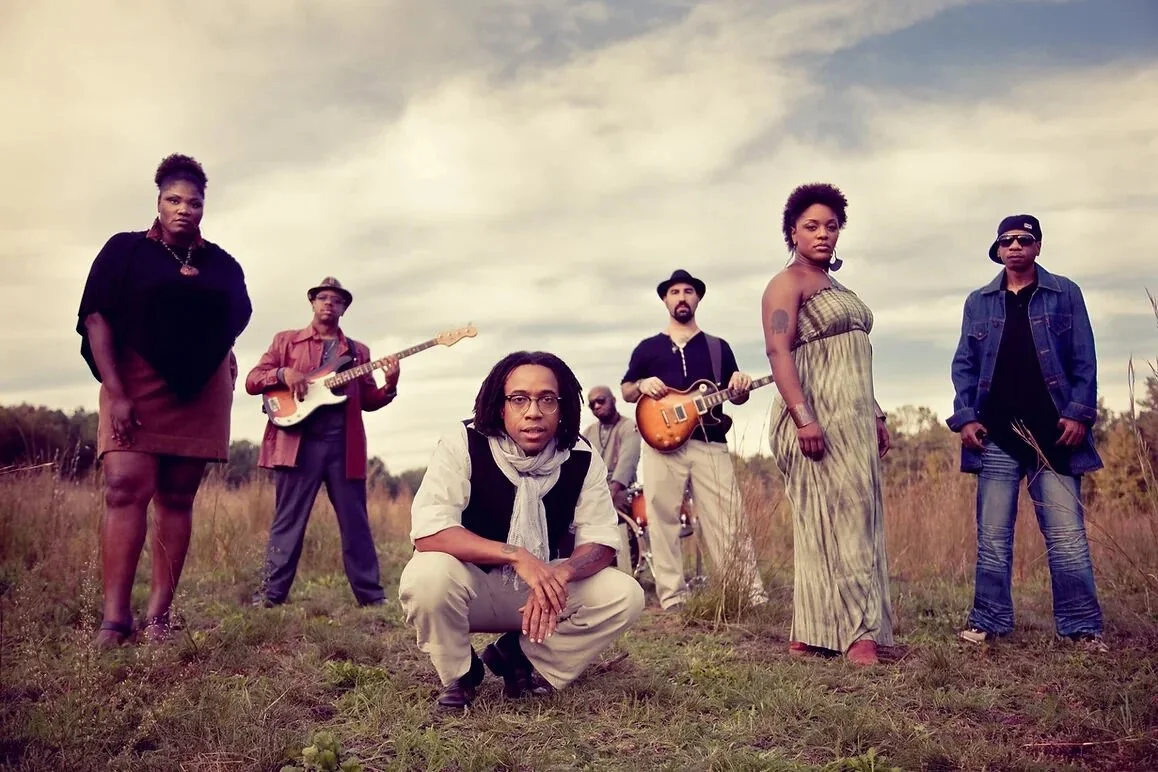
(Courtesy Photo)