This past weekend, my father was in town. It was his first time visiting Arizona in at least 20 years, and I was very excited to show him the quad-city area.
On Sunday night, as we sat talking on my deck in the gorgeous evening weather, he made an observation that I had noticed on a few different occasions.
Even though I had previously noticed the comment, his observation took me back a little, as he had only been here for the weekend. The former Marine who has made it his life mission to travel and study/enjoy as many different places in the world as possible — he has traveled from five countries in Europe to Mexico this year, not including I don’t know how many states — looked me dead in the eyes and said: “This city seems to be segregated.”
I know that I had to have sat there few seconds before I was able to ask him what he meant by that, but when I did he took his time to expand on his observation with the insight of the other places that he has been to this year.
His comment was based on the fact that wherever we went this past weekend, everyone who was enjoying the time out (not working) was white. This stemmed from the different places we ventured to around the courthouse plaza in Prescott to restaurants that we enjoyed in Prescott Valley.
I did inform him that the Quad Cities is a heavy majority white, but then he added with a very healthy Hispanic population. He said that there were Mexican restaurants all over the place, and that he noticed a lot of the laborers were Hispanic, etc. However, when we went out, not a single one was seen enjoying the leisure part of life, being any given day of the week or time of day that he was here.
It made me think, and he was right. We went to three different restaurants, located in Prescott and Prescott Valley, and not a single “person of color” was to be seen eating at one of the establishments that we went to. We attended another event on Sunday night, before we retired to my deck, and observed that he was most likely the only person of color there, outside of myself.
Yet, it did make me think. When we went out to dinner that night, before eating at a well-populated establishment in Prescott Valley, we were seated after people who came in after us, and once again my father being the only one who was visibly a minority. It went from being told that there was a five-minute wait to be seated to almost 40 minutes, with five minutes before we walked out the door.
I did a quick hit at my memory bank and quickly recalled a time in the past few months that I was down by the courthouse plaza at a different establishment that is known for taking some time to seat their customers, but this time seemed different. When my group of three finally got a table, an African American family walked in and waited to be seated. As my small group got our drinks and enjoyed our food, had a bit of a conversation, paid and got up to head back out for the night, I noticed that the family that came in directly after us was still waiting to be seated. I looked around the establishment and saw more than enough empty tables for them to sit at, but no one was helping them. I thought it was weird and rude that they were still standing there. And there have been a few other occasions that I’ve seen that kind of thing happen locally.
Now, I know that this is not the mentality of everyone in the area, as there have been other places I have been for a number of different activities and have not experienced or witnessed this. And, I am aware that the majority of people don’t even notice these things, being that it doesn’t directly happen to them, or that they have been exposed to it for long enough that they just don’t notice it.
Yet, and keeping in mind these are my anecdotal observations, if this is the way that minorities are treated in establishments around the Quad Cities, then it makes sense as to why someone wouldn’t want to venture out ... if they are overlooked, treated like maybe they are not seen, or if they are not acknowledged and go away.
Again, my father was able to pick this up on this in only a short matter of time.
With nearly 10% of the combined population of Prescott and Prescott Valley (and nearly 20% of the PV population alone) being Hispanic (according to the U.S. Census data of 2020), one would think that this type of situation wouldn’t happen.
I believe that we, as a community, can do a lot better.
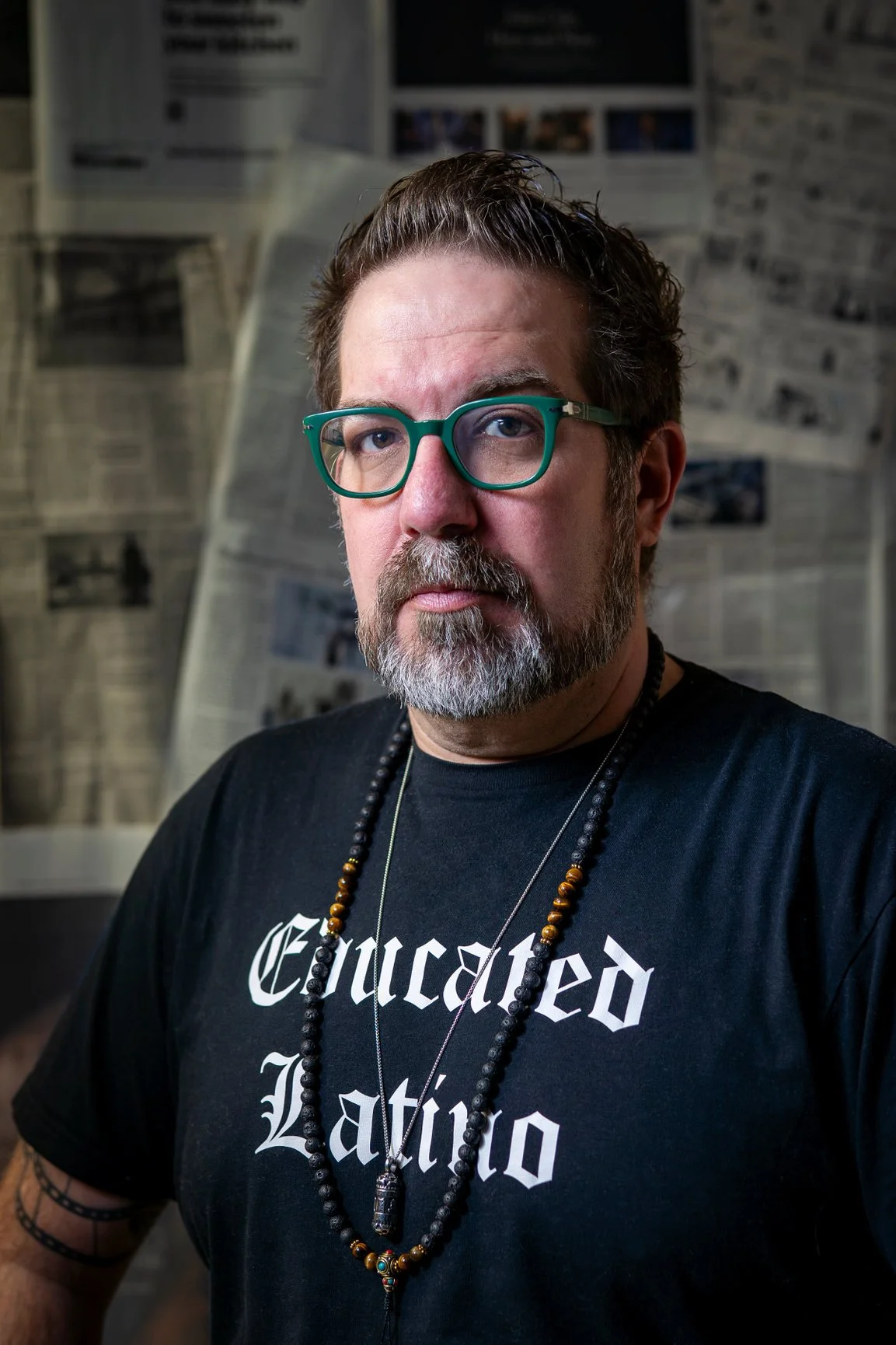
Chris Ortiz. (Kim Marsh Photography/Courtesy)